By: Curtis Sindrey –
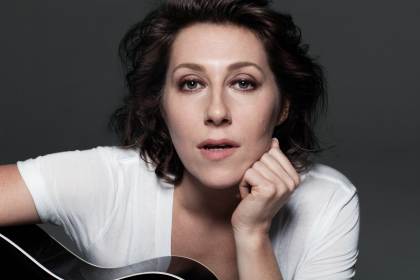
Following the death of her mother Kate McGarrigle from cancer in 2010, singer-songwriter Martha Wainwright was left with not only a musical guide, but a spiritual one as well.
On her new album Come Home To Mama, Wainwright provides several tributes to her late mother, specifically with her first single “Proserpina,” which serves as the centerpiece of the album. McGarrigle also wrote the song prior to her final concert, a Christmas show at the Royal Albert Hall in London, U.K.
“It was really beautiful to do,” said Wainwright over a phone interview. “I actually recorded it before I started making this record, and when we were halfway through making this record, I remembered that this song was there and I thought we needed to incorporate that into the record,” she said.
The video follows the story of the Greek goddess Proserpina, who “goes to the underground with her father, and her mother is really pissed off about it so she makes the Earth cold which is why we have winter,” said Wainwright. “So the concept is to pass through the seasons like a rite of spring and the concept of rebirth in the spring,” she said.
Wainwright worked with famed producer Yuka Honda who provided a nurturing recording environment, which was ideal for Wainwright at the time.
“Between I Know You’re Married But I Have Feelings Too and this album the writing process was the same where I wrote the songs before coming into the studio,” said Wainwright. “The studio was a completely different thing because we were at Yuka’s house where she lives with Sean Lennon, like in her living room basically, and the approach was very organic and very nice.”
“A very nurturing environment was exactly what I needed because I was very spent emotionally from my mother dying and having the newborn so there was only so much I could do and I think that Yuka really helped to take up all of the responsibilities and create something that is really beautiful,” she said.
In the past Wainwright and her husband Brad Albetta worked together on her albums, but Wainwright admits that the process of making records usually becomes very intense and you get far too wrapped up in your work.
“It’s dark and lonely at times and fearful of the future and also the life change that happens when you lose a parent so it’s a new phase.”
“I’ve been thinking that I wanted to work with a woman and I’d never had a strong feeling about that before,” said Wainwright. “I don’t know whether this was because of the material or because I had a child, but I needed someone who would understand me so I was just really inclined to work with her and when Brad suggested her I thought that it was a great idea,” she said.
Wainwright goes on to explain that her new album’s subject matter is darker with a few upbeat songs.
“It’s dark and lonely at times and fearful of the future and also the life change that happens when you lose a parent so it’s a new phase,” she said.
With her first new studio material in nearly four years, Wainwright believes that she has only gotten artistically stronger. “I think that this album has opened up a little more stylistically and evolved hopefully,” she said.
Despite growing up in a folk music-oriented family with her father, Grammy Award-winning singer-songwriter Loudon Wainwright III and her mother, Wainwright refuses to carry the badge of a modern folk musician.
“I was trying to run away from that as a young person, you know, I was like ‘let’s get a synthesizer’ so it’s always interesting to me when people are pulling out their banjos and fiddles because there was always something that I rolled my eyes at because we were forced to listen to it all the fucking time,” she laughed.
Artistic personas have the ability to shield an artist from their audience and sometimes from themselves. Wainwright, however, asserts that that doesn’t have a persona and that they are easily defined.
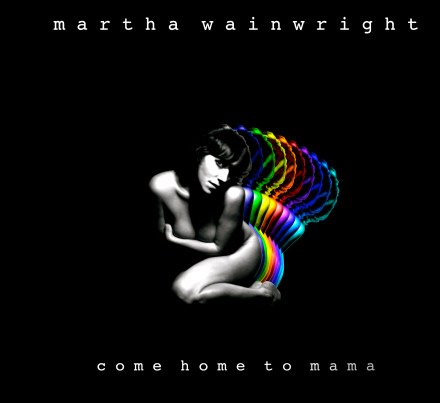
Wainwright drew from several recent life experiences while writing her fourth studio album “Come Home To Mama” including the birth of her son Arcangelo in November 2009, and the death of her mother, Kate, from cancer in 2010.
When introspective about her career, she said, “I’ve always been autobiographical in my songwriting, and although I’m not always completely literal because in music I think that you need to have more drama than in real life, I tend to push the envelope with some lyrics and make it seem crazier than it really is but generally it’s an extension and expression of my experience and it’s the same on stage so it’s very exposed so I think that can be more convoluted in a way with a persona with a look and a sound,” she said.
Going further with the idea of image control, Wainwright admits that she wished she, “Had the guts to do that [ban photographers from a show].”
“It’s completely apparent that there’s a problem now with digital photography, so it fucking sucks and with so much media and opportunity to see artists where people are shooting video and it’s going right up to Youtube and it’s a constant borage of information that it can be kind of like ‘ugh’ why do I have to have every moment be fucking on view,” said Wainwright. “But with that being said, artists, the egomaniacs that we are, would only hope to as much Youtube views as possible,” she said.
On the phenomenon of crowd funding and her participation in it, Wainwright is very open about struggles that musicians have had with dwindling album sales and the rise of the digital download. She is currently undertaking a Pledge campaign in order to conduct a U.S. tour, where she often doesn’t travel to because, “The guarantees aren’t high enough and trying to get some musicians out on the road [is tough],” she said.
“I wish that I wasn’t in the position where I had to do it but I don’t see any other way,” said Wainwright. “Cutting out the middle man is the only way to go and because people aren’t buying records, they need to consume new music in other ways and some of that is through live performances and I can only say that for someone like me that it’s necessary,” she said.
She goes on to say that record companies’ support for touring musicians have significantly decreased or evaporated completely and that while there are some ways for musicians to obtain financial support from the Canadian government through organizations like Starmaker and Factor grants, there simply isn’t enough resources for the multitude of musicians throughout the great white north’s collective music scene.
Since giving birth to her son, Arcangelo in November 2009, Wainwright’s touring motivations have changed. “I have a family and a child, and I want my son to have a nice life so I want each show and the tour to be successful and to have a tour bus so we can travel comfortably and we can stay in slightly better hotels, all of these things that come with selling more, not that people buy records anymore, but more digital downloads, more recognition, more placement and a little bit more success so that the comfort and the quality of life of my family is enjoyable and nice,” said Wainwright.
“I’m motivated to work as hard as I can and I always work within the realm doing exactly what the hell I want to do and I’ve never done anything because it would sell more records so within those parameters I can be a completely free artist,” she said.
Wainwright will be touring throughout North American in support of Come Home To Mama beginning on Wednesday October, 10 in Brooklyn, and a Toronto stop on November 8th at the Great Hall.
 Aesthetic Magazine | Album Reviews, Concert Photography, Interviews, Contests
Discussion
No comments yet.