By: Curtis Sindrey –
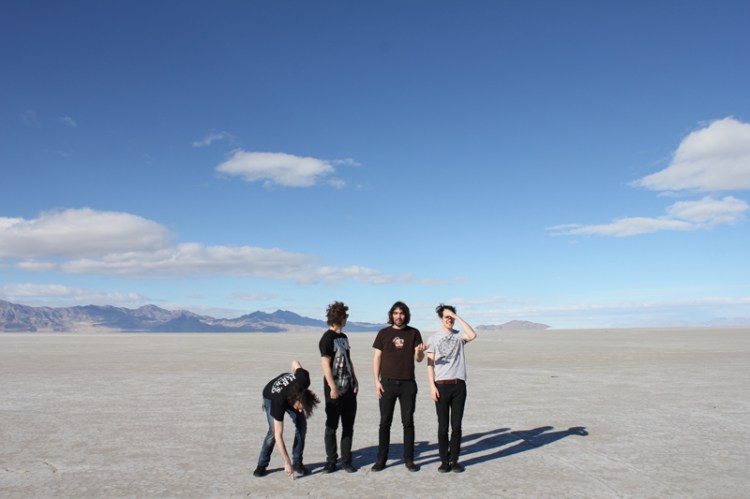
Hollerado
With the release of their second studio album, White Paint, in February, Juno Award nominees Hollerado have transformed into a band that are dead set on living and creating on their own terms.
“Hollerado has always been very DIY,” Hollerado front man and guitarist Menno Versteeg says. “And the music industry machine doesn’t care as much as you do and if you rely on them to do things, they won’t put as much thought and care into it as you would because they’re just going to plug it into a formula.”
“One thing that we’ve done is that we’ve been careful about which elements of the music industry we choose to bring into our world.”
While Versteeg feels that he reached success the first time he stepped on stage, he remains humble about the journey that he and Hollerado have ventured on since debuting in 2007.
“You can’t think of success as a thing that exists,” Versteeg explains. “You just have to think that this journey is amazing and go on it and you must have goals and strive to do things and be grateful when you get to play the Air Canada Centre or something, but thinking about success versus non-success is a pretty zero sum way to look at it.”
“All of my relatives are so happy for me because “I finally made it,” but I ask them ‘can I borrow bus money for the way home?’”
Hollerado is currently on the road with Billy Talent on their Dead Silence Tour, and while they are playing large capacity arenas, Versteeg isn’t living the rock star lifestyle.
“My wife and I were taking the TTC to the Air Canada Centre where I’m playing a fucking show, and I get a call from the credit card company and I have to pay off the bill and I look at my bank account and we’re at [something like] minus $1000,” Versteeg admits. “All of my relatives are so happy for me because “I finally made it,” but I ask them ‘can I borrow bus money for the way home?’”
While critics have argued that Hollerado makes “disposable pop music,” Versteeg argues that while their music is catchy, if you scratch beneath the surface, you’ll find perspective and depth.
“One of my mandates is to make music that is catchy and has a broad appeal, but it’s not disposable,” Versteeg argues. “Because it says something and it’s presenting a perspective and taking a stand and it’s not the same as the songs that you hear on the radio constantly and I pride myself that we’re accomplishing that to some degree.”
White Paint’s creation was bittersweet for Versteeg. Getting married to his long-time girlfriend and the death of his late grandfather, who he enjoyed a close relationship with and was one of the catalysts in encouraging Versteeg to play music, all had a profound effect on the album’s songs.
“The songwriting for White Paint was engrained with my grandfather’s death and my marriage,” he says. “I got older since Record in a Bag (2009) and I tend to think about things a lot more now and my grandfather’s life was always a source of inspiration for me and it really put things in perspective like what do you leave behind and what’s the point of all of this, and does a legacy even matter.”
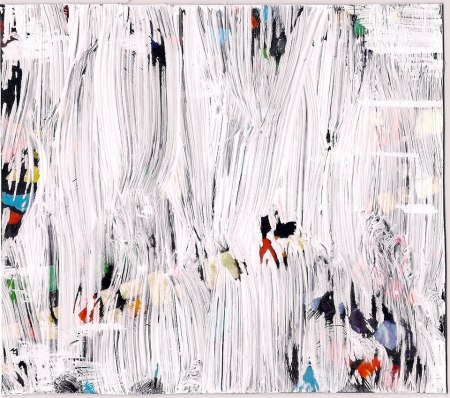
Hollerado’s new album ‘White Paint,’ was written and recorded in a span of five months while lead singer Menno Versteeg got married and grieved over the death of his grandfather.
“What’s the point of even making an album because that’s going to be gone one day too because we are a spec of dust in the grand scheme of things.”
Versteeg says that his grandfather, Charlie, immigrated to Canada after World War II with “seven kids, totally broke and he had a job as a furniture salesman, but he was barely feeding the family,” and he decided to create stain glass windows due to both desperation to feed his starving family and to make a living on his own terms.
“He was selling furniture to a church and they said that they couldn’t afford furniture because they had to buy these new stain glass windows,” Versteeg explains. “And he told them that he made stain glass windows, but he had no idea how to do it. And because he didn’t know much about it, the windows were of his own style, which after he get more well-known people began copying it because he wasn’t trying to be anything that he wasn’t.”
Charlie served as one of Menno’s early mentors in both developing his interest in music and strengthening his DIY work ethic.
“He’d always say to me ‘you stink,’ and I did, I was a really bad singer when I started,” Versteeg concedes. “It always creeps me out when you see a 14-year-old and they’re really good, especially when their parents put them in talent shows, or you see these bands with 12-year-old kids and the dad is the manager, like let them figure it out on their own and if they want to [play music] they will. [Charlie] said that he wouldn’t lend me any money to buy a guitar, ‘are you crazy, you suck. Go out and work to earn money for a guitar and keep playing if you want to get good,’ and I really like that attitude, that encouragement without handing it to you.”
Versteeg says that, like money, he doesn’t place any importance on accolades; instead it’s the praise from fans and peers that drive him.
“The best thing is when a fan comes up to me and says that they had a terrible day and they played one of our songs and it made a difference, it’s so cliché, but that means a lot,” he says. “And even when something like that comes from someone like Jack White [it means something], but having an arbitrary body of Canadian music industry voters that you are the best this or that, it’s not a big deal.”
At some point Versteeg wants to exercise Hollerado’s musical muscles and deviate from what they’ve done in the past, but he admits “we haven’t earned the trust of our fans yet where we can just try something different for a bit.”
“I’d love to get to the point like Neil Young, who has so many albums where he didn’t give a fuck about anything and he just said like ‘with this album, let’s try this and see what happens,’ and I’m looking forward to doing that,” Versteeg explains. “We’ve released demos and b-sides that are stranger, but we don’t have the resources yet to spend a big bulk of time on something that’s not a collection of songs because you only have [the fans] attention for so long until you really earn it and we really want to earn it and then have them trust us enough to try something different.”
 Aesthetic Magazine | Album Reviews, Concert Photography, Interviews, Contests
Discussion
No comments yet.