By: Curtis Sindrey (@SindreyCurtis) –
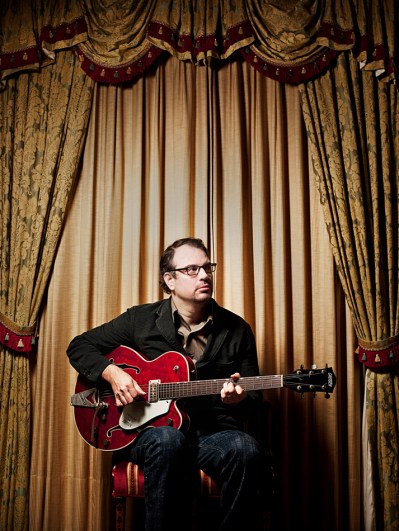
Since the release of his 2011 “experimental” album in Lights of Endangered Species, Canadian music icon Matthew Good has revisited his roots with his new album, Arrows of Desire, with roaring guitars, pounding drums and the occasional acoustic ballad.
“It comes down to songs, really,” Good says while on the rooftop of Noble Street Studios in Toronto before a brief acoustic session for contest winners. “At the end of the day, any record is a presentation of songs in whatever sonic twist that you give it so when I started writing this record, I wrote “Via Delarosa” and “Arrows of Desire” first and they just translated very simply and there wasn’t a lot of bullshit involved so because of that, it very much lent to the cadence of the album.”
While his previous album, Lights of Endangered Species, carried a heavy creative debt to Talk Talk, Good reached back to songs by Minnesota-based alt rockers Hüsker Dü, The Replacements, The Afghan Whigs’ 1996 album Black Love and “everything Pixies have ever done”. Good says, “With [Pixies’] new material, everyone expected them to do something similar to “Where Is My Mind” and they didn’t, they just went and played like Pixies and that’s awesome and I love the way that Frank vocally approached all of that material and it’s very reminiscent of things like “Surfer Rosa” and “Come On Pilgrim” and I’m totally down with it.”
Much like Matthew Good Band’s critically acclaimed 1999 album Beautiful Midnight, Arrows of Desire’s sonic landscape is also stocked with metaphor-laden tracks that Good says fans will be able to take what they want from each song.
“That was something that I definitely did on purpose”, Good admits. “I wanted that sense of ambiguity and metaphor in there so that people, even if I’m singing about something in particular, can extrapolate something completely different and they can apply it to themselves.
Good feels justified to go back and forth between writing songs that deal with a particular subject and writing tracks that are ripe with ambiguity, and he couldn’t care less how it could affect his popularity or album sales.
“When [Matthew Good Band] broke up, I made damn sure that [I wouldn’t be pigeonholed into one thing] and I’ll take a huge hit in sales and popularity, but I didn’t want that to happen so I made records that I felt that represented the things that I wanted to do at the time, and I’ll continue in that vein of trying to do different stuff and if I come back to a record that evokes nostalgia in people than that’s absolutely fine”.
Good’s songwriting has come a long way since the Matthew Good Band’s early days, a point that he made clear during my previous interview with him back in March when he said, “Last of the Ghetto Astronauts was a fucking horrible album. It’s massively immature, the songwriting isn’t good, and I think a lot of Underdogs is terrible too.” His songwriting process has since become more streamlined where he typically only writes a set number of songs to fit an album, aside from a few moments including on Arrows of Desire, when he wrote an incomplete song called “Palomino”, also on 2003’s Avalanche and 2004’s White Light Rock and Roll Review where he wrote “Long Way Down” and “Hopeless” in the studio.
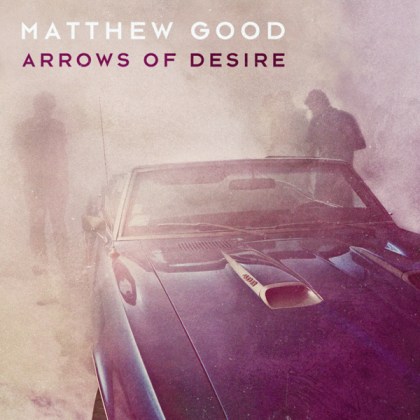
With Matthew Good’s new album, ‘Arrows of Desire’, Good was heavily influenced by mostly alt rock bands like The Replacements, Husker Du and Pixies.
“At a certain point in your career you know your craft well enough to know while there are those bits that you like, but you won’t be able to pull it off”, Good says as he takes another drag from his cigarette. “[When you’re older] you can self-edit, but when you’re 24-years-old that’s an impossibility because you want everything to be good so you’ll live with the crap around it but now you just delete it and go on to something else.”
In the early stages of Arrows of Desire, Good notes that he had “every option on the table” in terms of the type of album that he could create. “I could have done an acoustic record, I could have done another record like Lights of Endangered Species,” Good says. “Or I could have done something more electronic-based, I could have done anything.”
While he is primarily known for both his acoustic songs and his loud and brash rock anthems, Good asserts that an electronic album isn’t outside the realm of possibility, as long as the beats are good.
“If you get good beats and work that shit out, you can still add some cool guitar lines over those beats, like stuff that Moby does, I think that’s really cool”, he says. “And there are a lot of bands that do that sort of stuff that are really good and I’m a huge Depeche Mode fan and the reality is that Martin Gore is a genius and there’s no questioning that fact and he’s an unbelievable songwriter so even that isn’t outside the realm of possibility.”
Good mentions the 1994 Bruce Springsteen hit “Streets of Philadelphia”, and its use of a drum machine and in doing so justifying that even an icon like Springsteen can experiment and evolve with success.
“It’s those fringe fans”, Good says. “They are the ones who want everyone to remain the same and for some bands like AC/DC that works, but can you imagine Jeff Tweedy doing that, no, and that’s why he’s one of the best songwriters of my generation because he can take a song on guitar and then throw the guitar out the window and recreate that song using other instruments and finding something completely new and different and that’s what makes him exciting and yet he can still come back and play by himself acoustically and do the songs as much justice.”
While it’s uncertain whether we can expect a Matthew Good electronic album in the near future, his new album, Arrows of Desire, creates a sound that is familiar but not safe. Good refuses to remain artistically stagnant, and while this record might evoke nostalgia for some, Good doesn’t give a shit and neither should you.
 Aesthetic Magazine | Album Reviews, Concert Photography, Interviews, Contests
Discussion
No comments yet.