By: Daniel Gerichter (@ZenDonut) –

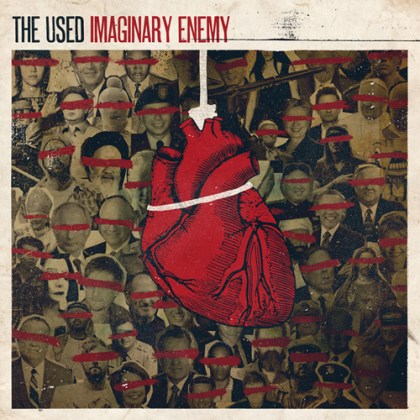 Most bands don’t endure 12 years of touring and recording without growing up a little, at least that’s the hope. With the release of their sixth album, Imaginary Enemy, The Used are wearing that maturity on their sleeves.
Clearly, the band has outgrown their Screamo origins (shudder). We all have. Imaginary Enemy proves that the band has matured as people, and with a contemporary awareness of the times. The album layers on a slick wall-of-sound production and an emphasis on heavy dubstep drums a la Imagine Dragons, but avoiding cliché – it’s not a bad thing.
“Revolution”, the album’s kickoff track, thunders out of the gate with crunching guitars, dense fills and a memorable, chant-along chorus. Bert McCracken – now a pop-punk elder statesman – has merged his well-documented issues with drugs with an overtly political tone – “It’s not enough to kill the past – Be blind to history – And all at once there’s a black cloud coming – Made of gasoline”. And it’s charge-leading lyrics like those that add substance to Imaginary Enemy, although McCracken’s angst/drugs/angst formula is still there for old times’ sake. Topics now include war abroad and political division at home on “Imaginary Enemy” – “You’re not a part of what we need – There is no common ground – We hate what you believe”, but keep old tropes, like broken relationships, like on “Cry” – “If you’re gonna get me back you’re gonna have to ask nicer than that”, and substance abuse on “Overdose” – “And in the end I found peace – My darling drug you kill me”, in the fold. McCracken wisely chooses to avoid being too specific with his politics, positioning himself in a Rise Against frame of mind, and instead focusing on the personal turmoil resulting from those issues.
While “Revolution” sets the thematic and lyrical tone of the album, its frantic pacing is something of an anomaly. The rest of Imaginary Enemy keeps the riffs, but foregoes the machine-gun pace in favour of polish and (much) higher production value. It’s obvious that the band has picked their horses when it comes to radio play, with songs like “Generation Throwaway” and “Evolution” sporting plenty of “Whoa-woo-whoaas” to keep the punk spirit alive but wholly eradicating any semblance of political controversy. Older fans may struggle with The Used taking a turn this mellow and safe, but it’s somewhat refreshing to get the occasional positive spin on things from McCracken, on tracks like “Kenna Song” – No more secrets, no more fear – Can you hear us now? – Bet you can hear us now”. There are even some nuances of time-signature experimentation on songs like “Force Without Violence”.
On Imaginary Enemy, The Used hold on to the angst that’s served them well in the past, but leave their trademark nihilism in the rearview mirror. Considering how integral that nihilism was to their identity, it’s a controversial, albeit necessary move, in an effort to grow up. This transition isn’t without stumbling blocks, but Imaginary Enemy is a successful gamble.
Essential Tracks: “Revolution”, “Imaginary Enemy”, and “Generation Throwaway”.
 Aesthetic Magazine | Album Reviews, Concert Photography, Interviews, Contests
Discussion
No comments yet.