By: Anan Rahman –

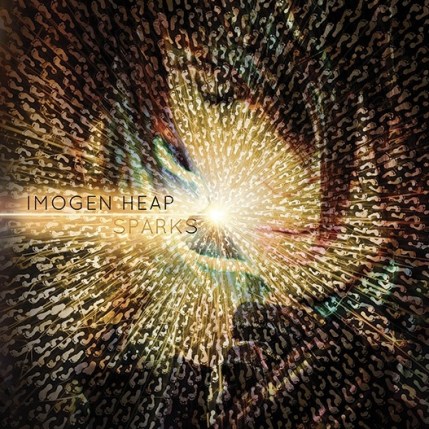
What sets apart Imogen Heap’s latest album Sparks beyond an ostensible collection of lush, post-modern pop songs is Heap’s truly panoramic breadth of vision. The album was painstakingly assembled over four years, featuring snippets of crowd-sourced audio bites, Bhutanese dranyens (when was the last time you heard that in a pop song?), and Heap’s own gesture-activated motion sensor “Mi.Mu”. There’s even a song on the album, which Heap plans to update every seven years until she dies. This emphatic sense of maximalism characterizes the recording process inspiring a sense of admiration as Heap’s vast scope of ambition.
The album opens up the airy piece “You Know Where To Find Me” floating over piano work, as Heap sings to her lover to lay still with her. The opening song reveals the expansive, chamber-pop DNA that runs through the core of Sparks, rendered slightly off-kilter thanks to Heap’s singular, signature style. While the song bears traces of Heap’s iconoclastic fore bearers like Kate Bush and Annie Lennox, the trajectory of Heap’s musical mission is unmistakably forward-looking. A wash of digital sound propels Heap’s classically trained piano work.
“Entanglement” opens with glitchy, arpeggios of synth, carrying over the interplay of organic instrumentation and digital sound.
“Listening Chair” is one of the early highlights of the album, a song that encapsulates the first 35 years of Heaps existence through stream-of-conscious reflections upon fleeting images, impressions and inner monologue. Heap deploys a spoken word section that elevates the mundanities of life into the realm of art: from pondering the politics of eating cheese, to wondering about the efficacy of having children. The near-schizophrenic observations culminate into an overwhelming question: “Who am I now?”, a central question to the album.
The most notable misstep in the album is “Mind Without Fear”, a song that draws inspiration from an iconic poem by Rabindranath Tagore celebrating the birth of self-determination in Bengal. Heap’s tribute comes off a bit like a Bollywood mashup replete with Heap’s ill-fated attempts to sing in Hindi. As pure as her intentions are, Heap veers dangerously into cultural appropriation territory without reaping much of the sonic payoff.
Fortunately, she redeems herself with “Me the Machine” – something of a philosophical antithesis to Pink Floyd’s “Welcome to the Machine”. While the latter is a nightmarish, dystopian examination of the ways in which technology can dehumanize human beings, Heap is much more at ease with the intrusion of the digital landscape into the human sphere. The generational schism is quite telling: whereas Pink Floyd in the early 1970s were just coming into contact with the digital world, Heap’s cultural context embraces the seamless interaction of digital devices into our world. While earlier generations often viewed technological advances with suspicion, Heap is perfectly at ease with “downloading romance”. This is her love song to the digital self, in the digital age.
Heap is not myopically optimistic about technology in her lyrics on “Telemiscommunication”, dissecting the near impossibility of genuine communication in the face of the modern age. It is telling that the song ends with the protagonist telling her partner that she loves him: the protagonist choice to re-assert her faith through the expression of the most powerful emotion cuts through the severed lines of communication.
The warmth in Heap’s voice transcends the digital bleeps and bloops that pepper the album, as its meticulous construction fades into the background. While the results are occasionally uneven, it’s a body of work that rewards repeated listens.
Essential tracks: “Listening Chair”, “Me and the Machine”, and “Climb to Sakteng”.
 Aesthetic Magazine | Album Reviews, Concert Photography, Interviews, Contests
Discussion
No comments yet.