By: Adam Harrison (@AdamRHarrison) –
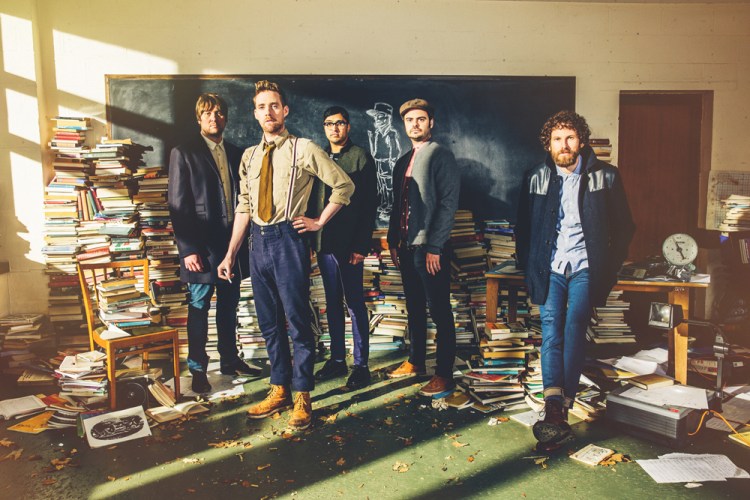
Kaiser Chiefs
Kaiser Chiefs, the anthem rock band from Leeds, England, just wrapped up the final North American leg of their current tour in support of their fifth studio album, Education, Education, Education & War, which they released just over a year ago. We took the opportunity to speak with bass player, Simon Rix, on the creation of their latest album, their pre-show rituals (which includes the “world’s worst disco”), and their undying love for Leeds United.
What were some of the influences and themes behind Education, Education, Education & War?
Nicky [Hodgson] was the other founder member of the band, and when he left it was the first time we made music not together for 15 years. It seems like a small thing, your drummer leaving, but it was kind of a big deal… we felt like we had to start again really. The influences changed throughout the process, the first band I think we really got into was B-52s, because particularly that first record had a real sense of ‘anyone can do this.’ You know what I mean? It’s like just grab your instruments and play. It’s like singing and everything just going on all at the same time and we really dug that. So we started off there and then the two main influences from when we actually made the record were Flaming Lips and [Pink] Floyd weirdly. I think the Flaming Lips thing was actually because someone pointed out that they had lost a member too and they just made it to a positive, and that’s the way to go again. I think Floyd lost one as well, but that’s a bit different.
We wanted to go somewhere different to the normal Kaiser Chiefs record. I think it’s a bit more expansive and there’s a lot more ambience going on in the background. But equally we had a whole thing we didn’t want to lose what makes the Kaiser Chiefs the Kaiser Chiefs. We didn’t want to start again and just be a totally different band. It was a weird mix trying to move forward and also stay the same. I think we achieved it on the record and we’re just getting to grips now on what we’re going to do on the next album.
Education, Education, Education & War is the first album with new drummer Vijay Mistry. What was it like introducing a new member to the band? Did it alter the writing or recording process at all?
I think everyone thought it was going to be a bit weird when we’ve played together for 15 years. It was a bit of a shock really how easy it was. We chose Vijay, who was a friend of mine and ours anyway, we chose him because we knew he would fit in quite easily with the band. When you’re in a band, it’s not just about musical ability; it’s about the persona as well, because you have to spend a lot of time together.
Musically, we returned to the beginning in a way. We went back to jamming in a room. We moved away from that on the record before this one. It was more like one person doing it on their own or doing it in a studio together, with an idea. Whereas at the beginning we went into a rehearsal room and just played and played and played until the songs formulated and sounded good, and then we went to record them. We went back to doing as much as we could before we got to the studio. We’re trying to hammer the songs and get rid of any fat that was on them. Really get them in shape. So [we got] Vijay involved in that, but I think we would have done that anyways whoever the drummer was because that was the direction we wanted to take.
Are there any traditions you have to spark inspiration before you write new songs? Or do you wait for inspiration to strike first?
On the last record, the thing that I really learned was that I enjoyed writing some songs at home, or with Ricky [Wilson]. We’ve got a little studio in London and we’ve made some demos and stuff, with just us two making them. But if it’s making music for the album, you must have all the people involved. Peanut [Nick Baines] has to be in there with his keyboards and lighting and everything. So a lot of the stuff that we did on our own, it wasn’t wasted, we used bits and pieces of it, but we never really took a whole song, because the whole vibe of the last record was to be a band and do things together.
Kaiser Chiefs have existed for 15 years now, no easy feat for many artists, what’s your strategy to co-existing as a band?
We weren’t successful for the first five [years], so when we starting selling some records and tickets to gigs, we’d be stupid to break up because we spent such a long time trying to get there. I think we just know each other really well. We’ve known each other longer than that even. We know each other’s ins and outs. Even Vijay who is new, he’s only been in the band for two years, I’ve known him for like 16 years or something. We just know each other, like each other, and let everybody be themselves.
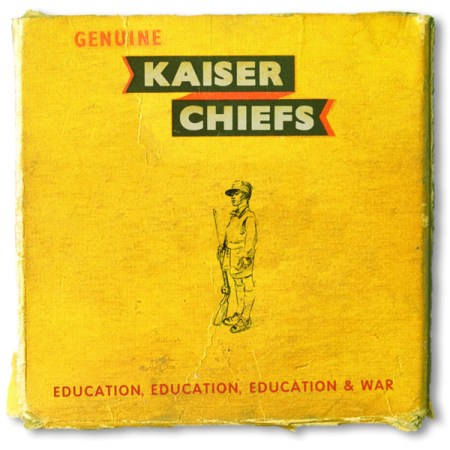
From Employment to Education, Education, Education & War, how has the Chiefs’ style and content changed or adapted over the five albums and fifteen years?
I think Education has kind of returned to the Employment. When we started writing for the record, there were two things we were thinking about: one, what was good? What was it that everyone liked about the Kaiser Chiefs at the beginning? We thought that everyone liked good songs, obviously, with big choruses. We thought people liked [when we were] saying something in the songs, like social commentary, about being too preachy. I guess that’s what we do, or at least I am. “Angry Mob” and things like that.
In the last couple of records before that we kind of drifted off and had songs that weren’t necessarily about anything. I think the best Kaiser Chiefs songs [are the ones where] we’ve got something to say. I mean you can’t force these things, but we just had that in mind. Then we thought about how we wanted to move it forward. Keyboards mainly I think, but this more expansive stuff, and the big guitar solos like in “Misery Company” and “Coming Home” and things like that, which drew from bands I said before like Flaming Lips and Floyd to create a bit of different landscape for us to sing the songs on top of.
On this tour alone, you are playing shows of many shapes and sizes. From 120,000 people outside at Glastonbury to about 1,200 here in Toronto’s Phoenix Concert Theatre, how do you cater your performance to the crowd? Do you have any pre-show rituals?
The last shows before we came to the U.S. were big arena shows in England, where we had screens and canons and confetti and flames and smoke and everything. All guns were blazing and they were fantastic shows, and we really enjoyed ourselves. The next show we did was actually in Canada, in Victoria, on the island. It was a warm up to maybe 300 people. But I enjoyed it just as much now, because we love the crowd and their reaction. We like playing our songs and people enjoy them and that’s what we do it for really. It’s sort of like instant gratification I guess. So it doesn’t matter how many people. You only play to the people in the room. That’s really corny, isn’t it? If there’s five people there, then that’s five important people. But if there is 100,000 people there, than there is 100,000 important people, which is good, but you just play for who’s there.
We rely on the audience to keep it kind of fresh, because playing songs in soundcheck is boring. Playing songs at a gig is always good because there is always something happening. Before the gig we just get together and play some music. We play some new music and some old music that we all like and have the world’s worst disco with five men… and no girls, which is a bad ratio. We just get in the mood, and get excited and then go on stage.
What are some of your favourite songs to play live and why?
I always enjoy “Oh My God”, I think it’s my favourite song we play live. It’s one of the first songs we ever wrote in Kaiser Chiefs. I think it was the first song where I really felt like we grabbed something different and new. It was like the blueprint for the Kaiser Chiefs sound in that era. Of all the old ones I still really love playing that, and it still makes me happy. And then I think all bands like playing the new ones mainly.
What holds your interest outside of music and why?
I like soccer/football. I’ll go watch my team, Leeds United FC, when I’m at home, which is not very often. I mean luckily for my job, I go travelling quite a lot so I’ve been in the desert and in Nevada before the tour, just driving around and taking pictures and eating food and sleeping and having a good time. That’s kind of what I like doing.
As Leeds United FC supporters, do you think they will ever make it back to the English Premier League?
Well, when someone rich and successful buys us, I think is the answer to the question. We’ve been in the championship now for quite a long time, and [a bunch] of people buy us and no one really seems to be able to get it together enough to get a decent team. We’ve had some good coaches and players, but the owners seem to sell the best players and generally fuck things up. We’re just waiting. We’re all being very patient. It will happen one day. One day before I die.
 Aesthetic Magazine | Album Reviews, Concert Photography, Interviews, Contests
Discussion
No comments yet.