By: Daniel Gerichter (@ZenDonut) –
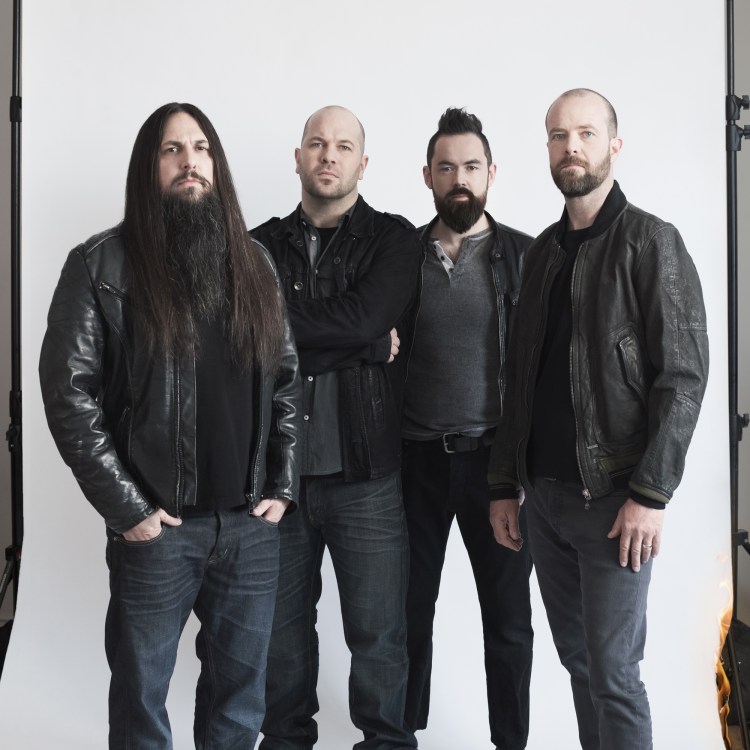
25 years of touring and recording have given the members of Finger Eleven pause. Five years of it, actually. Getting to the release of their brand new album Five Crooked Lines (out July 31st) was quite a journey for a band used to an aggressive release schedule and an even more aggressive touring schedule. In that time, the band drew new lines in the sand about their sound, their goals and their love for what they do, and it’s that transformation we all hear on Five Crooked Lines. Guitarists James Black and Rick Jackett took a few moments to talk to us about the path to the new Finger Eleven.
Five Crooked Lines is your first album in five years, which is an unusually long amount of time for you guys. What were the main reasons for such a long gap this time?
Rick Jackett: It just wasn’t ready. In a weird way, it took us that long to redefine what Finger Eleven means.
And after five years, what does Finger Eleven now mean?
James Black: We’re a rock band. We don’t need bells and whistles and we needed to create a record that was bare. Without the harmonies and the overdubs. I think we needed to stopoverthinking it. We needed to have that restraint back to figure what we really are.
So it was a rediscovery of sorts?
Rick Jackett: Yeah. I think it was more of a return to form than it was ‘getting back to our roots’. We weren’t trying to mimic our early years. We found that when we followed our hearts and our guts, it came down to raw guitar riffs, strong vocals and stronger drums. I’m not talking shit about what we’d done more recently either, but I think we relied more heavily on the nice things that big production studios afforded us, like increased use of technology. Thing is, we don’t need that stuff to make a great rock and roll record.
The sound on Five Crooked Lines sounds much more spontaneous, too. Was your creative process more spontaneous too?
Rick Jackett: It really was. From the time we got in touch with Dave (Cobb) to the time we wrapped up was maybe 13-14 days. We didn’t have time to argue or to deliberate on anything. We had to get our asses down to Nashville and get recording. We made decisions on the fly and we stood by them, which was really different from how things were in the past. I think the album sounds fresher and more exciting because of that.
Producer Dave Cobb has worked with a variety of eclectic artists. What made you guys decide, “this is the guy we need to work with”?
James Black: Probably what you just said. His resume isn’t a list of modern rock bands; it’s all over the map – some country, some rock, some roots stuff – just the texture of every classic record. The sound he brings to the people he works with is raw and natural.
Rick Jackett: For me specifically, that Sturgill Simpson album he made (High Top Mountain), I remember thinking this is not a typical country album by any stretch. It was exciting for me as a country fan, and I figured this is a guy who can help us find that same sound for a rock album. Dave can’t help but turn things on their heads when he goes to work and that’s exactly what we wanted. Other producers would assume we wanted the same sound from the last album, and Dave wanted to go in the other direction.
How did your worlds come together for this project?
Rick Jackett: It happened very organically. We made a list of guys we were interested in having on as producer, and after hearing that Sturgill album, he was on there. This process always starts with a phone call, you know? At the end of that call, both parties know whether their philosophies and work ethics line up and they definitely did with Dave.
James Black: You can tell what direction they’re headed in based on the demos they’re interested in.
Rick Jackett: Dave didn’t even listen to any of the demos (laughs). He said he knew who we were and nonchalantly said “yeah just come down to Nashville and we’ll make a record”.
James Black: We had 30 or so demos we wanted to work on and we couldn’t figure out which ones were going to make it or not. That’s usually the most overthought part of the whole process and the one that sparks the most fighting, but with Dave, for some reason it was pretty obvious by the end. It’s never been like that before.
Nashville is the country/rock/indie Vatican. How would you describe the energy in that city?
Rick Jackett: There are a lot of musical towns out there, but Nashville’s the only one where there’s no snobbery. Everyone’s like “you’re a musician? You’re part of the team”. No matter what you play, no matter how successful (or unsuccessful) you are, everyone is very supportive. We left wishing every city was like Nashville.
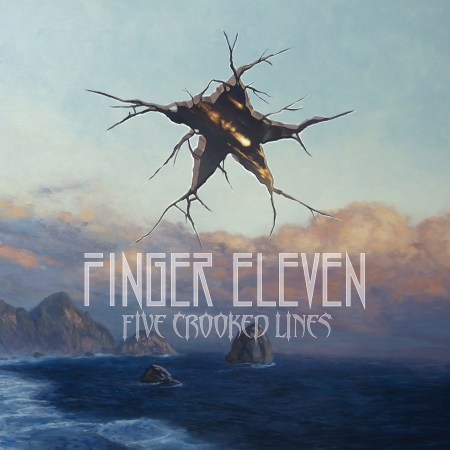
Finger Eleven’s new album, Five Crooked Lines (out July 31st).
What were the most creatively challenging tracks on the album?
Rick Jackett: I think the song “Come On Oblivion” was one of them. It started very simply, but everyone knew there was something special there. It’s a long song and writing songs like those is a challenge because it can’t get boring.
James Black: Once it started to take form, we knew it was also one of those songs we always wanted to put together, so the big challenge was not fucking it up (laughs). It’s loud and aggressive when it needs to be but elegant at other parts. Getting there was a really delicate process, but I think it we’re a better band for it.
For creative people, there’s nothing like that moment where you realize the thing in your head is now tangible.
James Black: There’s really nothing like it. With a few of the tracks on this album, that’s exactly how I felt, too. With “Wolves and Doors” and “Absolute Truth” I felt like I had nothing to do with it and it’s this ideal-sounding music. This is the first time I think any of us have been this satisfied in a long time.
How has your songwriting process changed through the years? How did that help you put together the tracks on Five Crooked Lines?
James Black: This time, we weren’t the typical five-piece that we’d been in the past. We were a four-piece, so we had to create the rhythm section ourselves. That on its own changed everything. Part of the writing process was a different shape, so all of us had to go out of our comfort zones at the same time – which is why I think we got the momentum we had. There was no room for the cookie cutter approach this time.
Rick Jackett: We used Dropbox a lot this time. One of us would be on our own and make a drum loop or a riff and instead of waiting till everyone was in the studio together to get opinions, we’d just say, “here, it’s in Dropbox. Do something with it, because I’m going to bed” and by the next day, it’d be this totally different creature. Everything evolved that way and we never took that approach before.
A couple of your songs have been used by the WWE, who have a long, storied history of working with musicians. What were your own personal experiences like working with them?
Rick Jackett: They already had an idea of the song they wanted for Kane’s entrance back then, they just wanted someone to expand on it. We recorded something for them and didn’t hear back from them for a while. We figured “no way they’re using it” and then we’re watching one of their pay per views at a bar and Kane comes out to the song we recorded. We heard it for the first time everyone else did. I don’t know if WWE did that on purpose, but as a fan of theirs, it was actually a really special moment.
You guys have been around for so many key phases of the music industry (grunge, nu metal, napster, boy bands, vinyl resurgence, etc). Of those eras, which was the bestto be a recording and touring band?
Rick Jackett: I’m going to say the late nineties, when we had just started. It was a really awesome time for rock music in general. Everyone wanted to go out and see live music and that’s one of the times where I think we all felt it most on stage. Plus, we’d just signed to Windup Records, who were having this incredible success with Creed. That success really trickled down. There were always huge tours to join up with.
James Black: Honestly, I haven’t had that feeling about playing live till now. Back then; I had this attitude of like, ‘play every show like it’s your last’ and since then, things felt more and more by the numbers. But lately, it’s almost like this spark has been reignited. I guess after five years of not doing it, you start to remember only those kinds of explosive times. It’s nice to have it back.
If Finger Eleven from 2015 could have a chat with the Rainbow Butt Monkeys of 1996, what advice would you have for them?
James Black: I think we were doing it for the right reasons from the beginning. I don’t think I’d tell myself from back then to do anything differently. I listen to those songs today and I feel like they were accomplishing the smaller dreams we had as a band back then, so I don’t know if it had even been in my mind the kinds of bigger goals we’d all develop.
Rick Jackett: I really love what I do. If anything, I’d tell myself not to fuck anything up because I am having too good a time (laughs).
Pre-order Five Crooked Lines here.
 Aesthetic Magazine | Album Reviews, Concert Photography, Interviews, Contests
Discussion
No comments yet.