By: Gemma Mastroianni –
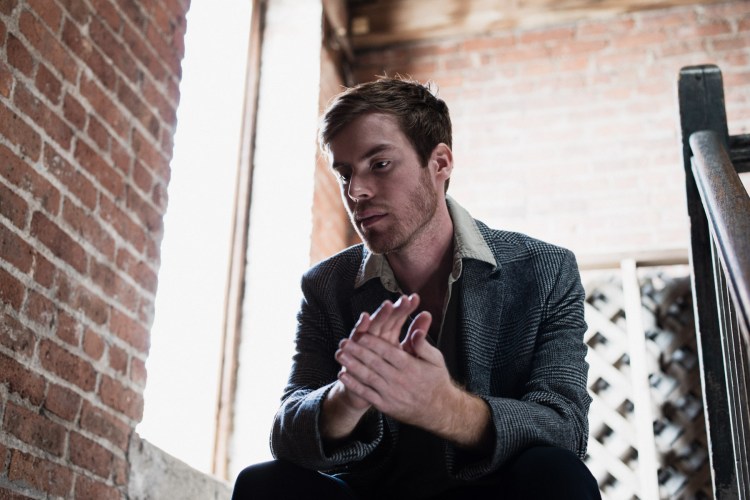
Wild Nothing. (Photo: Shawn Brackbill)
When Jack Tatum (aka Wild Nothing) began work on Life of Pause, his third full-length to date, he had lofty ambitions: Don’t just write another album; create another world. One with enough detail and texture and dimension that a listener could step inside, explore, and inhabit it as they see fit. This album goes beyond boundaries compared to his others; experimenting with soul, heavier vocals, and lighter instrumentals.
After a prolonged period of writing and experimentation, recording sessions for Life of Pause took place over several weeks in both Los Angeles and Stockholm, with producer Thom Monahan (Devendra Banhart, Beachwood Sparks), who helped Tatum in his search for a more natural and organically textured sound.
In our new interview, Tatum elaborates on his experimentation on Life of Pause, his love of soul music, and more.
What does “Life of Pause” mean to you? Do you want it to mean the same to listeners?
Its about the period that I spent touring the last record and all of the time off that I had after we stopped touring and I was working on Life of Pause. There is something in the title track (I can’t remember exactly) that goes like “I take a Life of Pause close to you” and its sort of a very straight-forward love song sentiment of the fact that I was gone a lot when I was touring. It was just about that, and the way we put certain things on hold in our lives whether it be a relationship or a creative endeavour, that has to be put on “pause” to focus on other parts of our lives; that is more or less what its about.
Since the album is influence by soul music, when did you begin listening to soul and what made you want to experiment with it yourself?
I’ve always kind of listened to soul music, Motown music is the kind of thing that you just hear everywhere all the time. It is so engrained into American culture in particular that it feels like a regular thing. I remember listening to Smokey Robinson’s tracks as a kid and always kind of liking it and as I’ve gotten in older my relationship with that kind of music has just grown. I’m just a fan of it and that’s really how it is. Its always been something I’ve had an interest in but never really had a place in my own music at least with the first few records that I did. I think with this record I had a lot of time to think about what I wanted to do and what the next step was, and I think that I allowed myself to kind of introduce myself to a handful of new ideas and that just being one of the few.
Are there any specific soul artists that influenced this album?
There are a lot of records that I have listened to over the last few years that have had a big impact on me. There’s a Marvin Gaye record called “I Want You” which was made with this guy called Leon Ware, I really like him. There’s also The Delfonics and The Hems, Blue Magic; it’s a very indirect thing. I started talking about soul music in interviews because it was something that was on my mind but there’s only a handful of tracks really where it is evident on the record; it’s not a full blown thing. I mentioned it a handful of times and now everytime I do an interview they’re like, “Talk about Soul music!” It was something that I did start talking about because I was listening to that music, and the song “Whenever I” on the new record is pretty rooted in soul. To me, this is still a rock and new wave record, I’m not trying to fool anybody.
The instrumentals in the new album are much more light and 80’s sounding, as well as more defining vocals, was there a reason for this? Where did this new sound come from?
When we were making this record, as we were mixing I kept having back and forths with our producer Tom and my friend Jake who ended up mixing the record. As we were getting towards the finishing stages of it and trying to figure out the right places for the vocals and with this record, I wanted the vocals to be a little bit more present than they had been in the past. It was only just to do something different and I didn’t want them to be so washed out as they had been in the past. In my first record that I made on my own it’s very covered and smeared which is a style which is cool and worked really well for that particular project but, I think with this one I wanted things to be a little clear and more forward. As far as the instrumentals go, its funny because I don’t ever consciously think about trying to make my music 80’s its just most of the music I listen to is from the 70’s or 80’s so when I’m making creative decisions within my own music, that’s just the music that I’m listening to, its just what I like I guess. I think because of who I am and the age that I’m at, I can’t help but be contemporary in some ways. I think there are certain touch tones that put this record in the past but I think it is still very much so a 2016 record.
If you could go back to 2009 when releasing you first single as Wild Nothing, “Summer Holiday”, what would you tell yourself?
I honestly don’t know if I would tell myself anything, I don’t think I would have any warnings. I think things worked out the way that they did and its been good for me so far. I’m extremely happy in the place that I’m at and I just released my third record.

Wild Nothing’s third album, Life of Pause, was produced by Thom Monahan (Devendra Banhart, Beachwood Sparks)
So you began recording Life of Pause in 2014, did you plan to release it two years later or were you expecting it to be released sooner?
There was definitely some hangups with this record in terms of how long it took for it to come out.
The last record came out in 2012 but I think there’s this misconception that somehow I was toiling away for four years working on this record (which wasn’t really the case). It just took me a while to formulate the right ideas.
I started recording the record and it was around last January when I actually started recording it; all of the songs were done by that point but that’s when I went into the studio. From the time that I went into the studio, it was like over a year that it took to come out.
The process got very spread out, we were recording in a few different places like Stockholm and Los Angeles, so there was a little bit of time between that. Then, I went back to New York and mixed it there so by that point it was getting into the Summer and we didn’t want to release it in the fall because it wasn’t going to be ready in time, but yeah it took forever for it to come out. I would’ve preferred for it to have come out much earlier but it was kind of the nature of it.
Is “Lady Blue” in relation to a specific situation or is it more of you just generally speaking?
That song is sort of typical of a lot of songs that I write just in that it combines certain pieces of things. It’s partially about my current relationship. There are a lot of questions that get asked about my music, and I unintentionally do it when I’m writing lyrics but the chorus of that song is just kind of about coming to terms with somebody loving you. More or less its like, what did I do to deserve this? My lyrics are often half in reality and half imagined scenarios and pieces of poetic imagery.
Tell me a bit about “The Living Art Album of Life of Pause” and the filming process, where did this idea come from? It is something that has never really been seen before.
We started coming up with this idea for the album artwork and it was a very sort of simple vague idea that we just knew that we wanted to create some sort of physical space for the album shoot because at the time I was talking about how the record felt like it had a sense of space more-so than the other records.
We made the record by not trying to totally smooth things over as much as I had in the past, I liked the idea of there being more of a room sound; the sensation of hearing the room that the drums were being played in. The sounds are more separate in a way, its less jelled together and more organic. Because of that, we had this idea to create a physical space where the record would exist so that turned into this dream room; an imaginary space. We were able to find somewhere that we liked and were able to deck it out the way that we wanted. From there, it developed into the idea of it being cool if we could get the experience of walking in and out of this room. That was me and my friend Sean who is a New York-based photographer who came up with that concept and see it through.
This is your first album cover that you have featured yourself on, was this a conscious decision and did you shy away from this perhaps for a specific reason in the past?
I never really had interest in doing that until this record. There was something about this record that felt like it made sense. Part of it was when we were imagining the space, it just felt right that I would be in it. I’m not generally the type of person who likes plastering my face all over things and getting that sort of attention, but it just made sense for some reason.
I think there’s something about this record that does feel a little bit more honest about who I am, and where I am currently. I think representing the music and not trying to be so one-note or continue down the exact same path I went down before. I think it would’ve been really easy for me to just make another record like the last record so I think with this one it isn’t dramatically different by any means, but it does pull in a lot of interest and a lot of goals that I didn’t have previously.
Do you see yourself experimenting with other genres in the future? If so which ones?
Yeah, I think so. I’m always making music, demoing songs, and making strange little pieces. Its hard, when it comes to Wild Nothing I did try something new with this record but theres only so far you can get away from your initial starting point. There are personal pieces that I am working on all the time and I have pieces that are much more straight up 80’s synth pop that I don’t feel like makes sense for this record. I’ve even toyed with the idea of just writing more straight up pop stuff or, you could go the opposite way and just make stuff that is more experimental or loose.
Wild Nothing will perform at Canadian Music Week (CMW) in Toronto on May 5th. Buy tickets here.
 Aesthetic Magazine | Album Reviews, Concert Photography, Interviews, Contests
Discussion
No comments yet.