By: Curtis Sindrey –

Sum 41.
Pop-Punk mainstays Sum 41 are back with their first new album in five years, 13 Voices (out Oct. 7th via Hopeless Records).
Frontman Deryck Whibley began writing for 13 Voices immediately following his four-month stint in the hospital. The frontman recalled in a press release, “I had to learn how to do everything again-my motor skills, learning how to play guitar again… I couldn’t even walk at the time. It was really difficult, but at the same time if I didn’t have a record to make, I don’t think I would have recovered as quickly. Writing music gave me a purpose. I had to get better.”
In our new interview, bassist and backing vocalist Jason “Cone” McCaslin details the time following their gruelling Screaming Bloody Murder world tour when Deryck disappeared into a self-destructive fog of partying and heavy drinking, how friendships had to be rebuilt before they created 13 Voices, and more.
The touring cycle for Screaming Bloody Murder was your longest in your 20-year career. Were you guys feeling burnt out by the end of it?
Yeah, I think so, I mean there is a lot of factors like we started touring before we released that album, about a year before. So before the album was even released, we were touring and then we went right up until 2013. I mean a lot had happened over those three years I mean we went from being a band, a band that was getting along really well and then Deryck obviously started having his issues with alcohol so that was taking a toll. He also had his back problems we were always concerned with. So it was just a really grueling process by the end of it. I think once we ended 2013 we were all just kind of over it. And we needed to get away from the band and each other basically.
In the months following the tour, Deryck slipped into a fog of partying and heavy drinking. At what point did you realize he needed professional help?
We realized he needed help long before we ended. Along the touring cycle we had made steps for him, he already gone and went to rehab during the Screaming Bloody Murder cycle. We took a couple of months off and he went to rehab and came out, he wasn’t drinking for a while and then unfortunately life on the road isn’t easy for an alcoholic. You know it’s always around and as much as we tried to keep it from him…he…if you’re an alcoholic and you want to do it, you’re going to do it or find it. So he slipped back in, so we probably knew back in 2011-2012 that this was becoming a huge problem, you know. So when he got home from the tour and went right into huge partying and basically, staying hibernating in his house drinking. I don’t think anyone was really surprised by it and it was just unfortunate what was happening, what was going on. He wasn’t a guy that, I mean we tried to help him so many times and by that point he’s gonna wanna do it himself. And that’s like the cold cliché thing about alcoholics and drug addicts. They have to want to do it to, you can’t just force them into stuff because they will just do what they want in the end.
They have to want to change themselves in the end?
Exactly, it’s very cliché but it is true. I never really…I’d never gone through it before or ever seen a friend or a family member go through it to this extreme. I didn’t even know what to really do. So this was a first for me. So you try to do as much as you can but in the end they have to do it themselves.
I read that in the very early stages of the album, Deryck thought it was important that the band become friends first. After everything that happened, was reigniting your friendship with Deryck difficult for you or did it come back naturally?
There was definitely things that needed to be talked about, we hadn’t talked in over a year. Once he had gotten out of the hospital we were able to both talk with clear heads. With no substances involved and kind of reflect on what had happened and why it happened. So it was natural in a way because we’ve known each other since we were 14 years old. But then there were things that we had to basically get off our chests. And tell each other what we thought about things, stuff like that.
So, you know, it was a bit of a process and you know after a few conversations, seeing him and hanging out it was basically back to normal again. It felt really good because he was sober and he was thinking logically and I had a year to think about things as well. I knew that I was at fault for some stuff too. That I did to him so it was just a good, good to clear the air basically.
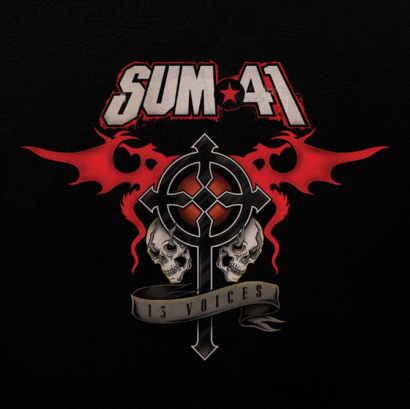
Sum 41 released their first new album in five years, 13 Voices on Oct. 7th via Hopeless Records.
The newest single “War” has a very symbolic music video in that it has reminders of Deryck’s past life, ie: empty alcohol bottle, etc. How did that concept come about?
We were kind of throwing ideas around for “Fake My Own Death” and we were almost going to do two videos at once. Because Deryck had that idea for “War”, he was like, ‘Hey guys I’ve been having this idea for this song, this kind of video popped in my head’ and told us all. We were like yeah, that’s really awesome. So that idea had been around for a few months it just didn’t come together as “Fake My Own Death”…I so we kind of did it a few months later but I think that was an idea he just had in his mind when the song was done. And he was thinking about visual what it was going to look like, so it makes a lot of sense. You know, it’s cool visually.
You launched a PledgeMusic campaign last year to finance 13 Voices. What has the crowdfunding experience taught you about being an artist in the 21st century?
Yeah, it was different for us, we had never done anything because we’ve always been on a major label and we’re not, Island and Def Jam kind of broke away from each other, we were kind of left on our own just with the management and this idea our manager had, this idea he had, actually he had this idea when we were still on Island as well. We were unhappy with Island in the end and he said ‘Well you know there’s always different avenues you can go down now, with this, this and this. Pledge Music was one of them and we’d never done anything like it. So when we sat down to think about it, we thought it was a great idea and we’ve always been pretty active on social media. Even before social media was around we were pretty active with our fans, you know doing tour videos and stuff like that. So it seemed pretty easy for us to do something like this because we were basically doing, we were always doing stuff accessible to our fans anyway.
Basically just taking that to another level and it was a good experience, I mean we would do it again, I think all of us would do it again. It wasn’t that thing where you like, it wasn’t a hassle like when you get stacks of albums and you’re like ‘well’ you know, that’s cool man, so many…you actually get to feel good, so bands may feel annoyed because they have to sign 2,000 albums but for us it just meant that 2,000 of them really want this album. And they want to help us out so, we were happy to do that part of it and we are very appreciative that, that many kids were involved.
In terms of having that openness with fans, that’s something you guys focus on lyrically. On the last record and your earlier stuff, you’ve crept away from themes of teenage mischief and that sort of thing on your earlier work to more personal and serious topics. How important is it that you maintain that kind of openness with fans?
Yeah, lyrically you have to… we have teenage fans now, it’s really crazy… we did a bunch of signings yesterday and there were a bunch of teenagers at the signings. They weren’t even alive, some of them, when we made All Killer No Filler. (laughs) It’s strange for us at this point that that’s happening, but still cool. They can probably listen to “Fat Lip” and stuff like that off that record and that speaks to them at their point in their life, but we can’t obviously make those songs anymore because we don’t know high school life. We don’t know what it’s like to be a 20-year-old right now. Maybe when our kids grow up we’ll sing about that again, because we’ll know again. (laughs)
You just sing about what you know and right now, this album is very personal for Deryck, it’s reflective of what he just went through. That’s what he wrote about and that’s what he knows. Back then we knew about high school and partying, that’s it. We’ve now travelled the world many times, seen a lot of stuff, and there’s so much to write about.
In terms of fans who might’ve gravitated to your sound during the All Killer No Filler or Does This Look Infected era’s, what would you say to them about the new record, if they hadn’t listened to you since that time?
This new record is a hopeful record. Maybe it sounds dark lyrically, but actually the undertones of it is a very hopeful album. It’s someone who had something really terrible happen to them, almost died, and now he’s back and feels good. He feels like he’s better than ever, so in that regard it’s very hopeful.
Musically it’s heavier than All Killer, heavier than Does This Look Infected even. It’s probably more along the lines of Screaming Bloody Murder, or Chuck. That’s how I would describe it to anyone who hasn’t listened to it.
Over the last couple of albums you’ve certainly almost abandoned the pop-punk sound on the All Killer record, into a harder kind of sound.
Yeah, I agree. Back when we did All Killer, that’s what we were listening to. We were listening to a lot of NOFX and all that southern California stuff that we really loved at the time. We still do, like I still listen to that stuff now, I think we’re just in this zone of that heavier, darker sounding, more minor chord progression songs than we were back in the early 2000’s.
You guys went through some personnel changes in the last couple of years with Steve’s departure and the return of Dave. How does that affect the band dynamic?
Any time someone comes and goes it’s always a bit different. When Dave left it was shocking, because the four of us had been together for so long, we grew up through high school together. Having Dave back is great, because it’s another old friend that you’re hanging out with again. We still talk, the rest of the band, there was no bad blood. We just didn’t see each other as much as we obviously used to.
When Steve left, I kind of saw it coming a little bit, because like I was saying before, the end of that Screaming Bloody Murder tour was so brutal. We weren’t really getting along with each other. Steve and I got along fine, but it was just a disconnect between people in the band. So when Steve left it was less shocking to me. Steve is still one of my best friends, so it’s hard not to have him around and I don’t see or talk to him as much now because I’m on the road and he’s at home, we both have separate lives now.
It sucks in that regard, but also we now have a new drummer who’s amazing as well. So it’s a bit of a different… when we started playing with Frank it was getting used to a different drummer. I’d been playing with Steve for so long as the rhythm section I guess, now you throw this other guy in and it feels different. But now me and Frank are totally locked and I think it sounds great. He’s a mellower guy than Steve, Steve was always kind of a joker and a funny guy. Frank’s a bit more mellow, so it’s just different personalities as they come and go, it changes the dressing room a bit, but on stage it’s relatively the same.

In terms of creating the record in Deryck’s home studio, what was it like for him and the band in general, being creative in that more comfortable environment?
I did some of my tracking at Deryck’s house, but I also did some tracking at my house, so this album is mainly done at houses and the drums were done at a real studio. That’s the first time we’ve ever done that, so it was different than we’ve ever done before. We were able to take our time way more than we have in the past. We had no label, so we have no one asking questions. Normally when you do records and it takes over a year, you’ve got the label guy phoning you every week like “hey, lemme hear something, I’m gonna fly out to the studio.” You never really want that to happen.
In the early days we had a really good relationship with Island and we loved our A&R guys, we didn’t really mind them coming by the studio. Once new people came and we didn’t really know them and they want to come in, it’s like “we don’t really want you hanging out.” So this time was relaxed, it was just us, no one breathing down our necks. It was good in that sense and it’s nice to record at home. There’s less costs involved and you’re not so rushed you’re like “oh my god, we’re paying $1,000 a day for this studio, I gotta get it done now.”
In terms of recording at home, how do you separate yourself from work in the studio?
I don’t really know what Deryck does when he’s at home, but for me, I have a kid now too, so it’s a little bit difficult. You have to set your own work hours, like you’re going to a job. “From five to midnight, I’m going to my basement studio and I’m gonna work.” You set your own schedule, it’s not that hard. Even having a kid, I just told my wife, this is my work schedule and I stuck by it. It’s nice because you can just go downstairs to your basement and hibernate down there for a couple of hours, then come back up and eat dinner, then go back down and do it. It’s very comfortable doing it like that. It’s just a little different, because normally in the studio you have a lot of people around. You have the other band guys around, or the engineers. This way it’s either just me and Deryck recording together at his place, or me recording alone at my place. You don’t have the same vibe, but it’s much more comfortable.
Also with your production experience it must’ve been a bit more comfortable, because you know what you’re doing.
Well yeah, that too. This is our seventh album, we all record, produce, now we’ve got four producers in the band. (laughs) So we all know how to record, we all know how to make it sound good. That way it’s not that difficult. When we were in our 20’s we didn’t know that side of things, now we all know what we’re doing.
In terms of being on a major label versus being an independent artist with Hopeless Records, what are the major differences between those two spectrums?
Hopeless Records now feels like what it felt like to be on Island when we were first signing. You knew everyone at the label, everyone had an interest in your project. You could go into the office and you knew everyone, it felt like a little family.
At Island, our whole team had left, then some new people came, then that team left, then more new people came. At the end of it, we maybe knew like a few people at the label. We didn’t really know anyone and we’d have people calling and we’re like “who the fuck is this person?” (laughs) Now at Hopeless it’s back to that comfortable, you know everyone, small team. They’ve got people around the world, but you go to the L.A. office and there’s maybe ten people at the office. Major labels have 30, 40 people and you know maybe two of them.
They’re good and bad for different reasons, but I think for us near the end [with] Island, the care factor wasn’t there because they didn’t sign us. They didn’t have an invested interest in us anymore because we weren’t their band that they signed anymore. Whether that’s because the record wasn’t selling as much as they wanted… major labels also have a higher expectation. These U.S. major labels sometimes have these higher expectations of what they think you should sell and the bottom line is that Hopeless seems a bit less like that. Obviously they want to sell albums, because they’re a record company, but they also love the band. They really wanted us on the label, they really love the band, it doesn’t seem like it’s all about the bottom line to them.
So they had a bit more of a vested interest.
Yeah, we want to sell as many albums as possible, obviously, but there’s other factors [in] why they signed us. They love the band.
 Aesthetic Magazine | Album Reviews, Concert Photography, Interviews, Contests
Discussion
No comments yet.