By: Mehek Seyid (@whatthemehek) –

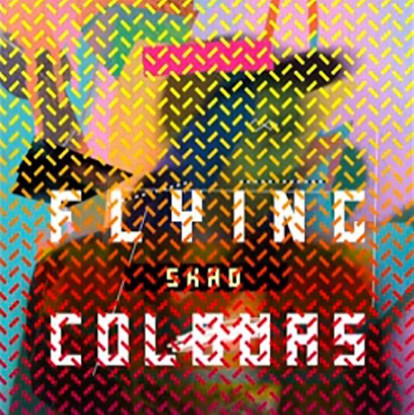
On “Stylin’”, the lead single from Shad’s forthcoming album Flying Colours, out October 15th, featuring Saukrates, he comments, “I got fans that say, ‘Oh hey Shad, I hate rap but I like you/Well I hate that, but I like you/ At least, I like that you like me”. It is an encompassing statement as it not only describes Shad’s diverse fan base, but it also speaks to the fact that he is as much a part of hip-hop as any other rapper.
But Shad has never been a gateway artist to others in the genre, mainly because he has built a career serving what hip-hop often lacks: minimalism, lyric-centric flow, and a voice that provides a relatable commentary that is similar to the thoughts of the average individual. Pair these characteristics with his immersive production that often consists of staccato-laden rhythms, indie inspirations, and cool-out beats that remind you of the Common’s early days, it’s no wonder that so many individuals stall with Shad as their foray into hip-hop. On Flying Colours, he is just as accessible, relevant, and sonically addictive as he has always been, making it incredibly difficult to even want to listen to anyone else.
It has been three years since Shad’s Polaris Prize-nominated, Juno Award-winning, well-received TSOL released. While many would allow that level of success to affect the artistic integrity of their future outputs, Shad refuses to conform to anything but his own rules. On “Intro: Lost”, he acknowledges this as he enters a high-speed tempo rhyme and asks, “Where the real MC’s at?/I’m dyin’, I need to hear someone as ill as me, stat!…I don’t rap for no fat contracts/Til’ the day that I pass on”. A listen to “Progress,” a seven-minute track that meshes spoken word, Don McLean’s “American Pie”, minimalist indie rock and an underlying sample that sounds very similar to Sweden-based Little Dragon’s “Twice”, will make one hope that Shad maintains his manifesto on “Intro: Lost” given how well he used these varying pieces to tell a unique, audibly pleasing tale.
This is the case throughout the course of the album, making it less of a cohesive listen than TSOL. The majority of TSOL’s production falls in line with more traditional hip-hop sounds. On Flying Colours, Shad draws from his varying influences to create a body of work that flows in a new creative direction, with bolder genre mashing and brighter beats, while staying grounded by the presence of the aforementioned elements that are critical to a Shad record On his second single, “Fam Jam (Fe Sum Immigrins), an upbeat track that features a repetitive, infectious guitar chord supplemented by acrescendoing trumpet and brief samples of A Tribe Called Quest’s “Bonita Applebaum” and Jay-Z’s verse from “Otis”, Shad discusses the struggles with identity, employment and survival that first and second generation immigrants often experience in Canada. This may offer one of the most personal insights into Shad’s mindset on the record given his family’s Rwandan heritage and his upbringing in London, ON, a tale that many listeners are sure to relate to as well.
This reflection on an individual’s journey is thematically present throughout the album, reminding listeners to consider circumstance and history when evaluating their position in life. On “Dreams”, Shad, over a series of low violin chords that are reminiscent of Radiohead’s “All I Need” layered between this dark reverberating electronic-esque beat, acknowledges sensory overload we experience through hyperconsumption, social and mass media that ultimately results in our inability to connect with one another and a sense of loneliness that humanity may not have had before. On his collaboration with Canadian sweetheart Lights, “Remember to Remember”, a track which will surely be a concert favourite, Shad recalls a conversation with his father where he urges his son to contemplate himself and his decisions throughout the his life. Upon listening it seems like such an easy thing to do, but something that many tend to forget to do in their busy lives.
Like Shad’s previous efforts, what makes Flying Colours such a great record is how he is able to approach such basic ideas and lessons without being condescending in his rhymes or repetitive in his methodology. Sometimes it may require him to have some support, like Eternia’s feature on “Love Means” or throwback to his production from The Old Prince like he has on album closer “Epilogue: Long Jawn”, but he always manages to grab your attention with every song. This is especially true once you realize that it feels like you are engaging in a conversation with yourself as you listen to the record. This album will inspire individuals to have these conversations on a regular basis, probably with Flying Colours playing in the background.
Essential Tracks: “Progress”, “Fam Jam (Fe Sum Immigrins)”, “Epilogue: Long Jawn”
 Aesthetic Magazine | Album Reviews, Concert Photography, Interviews, Contests
Discussion
Trackbacks/Pingbacks
Pingback: YSP Sound: Shad, “Flying Colours” Review | The Yonge Street Portage - October 17, 2013